0
SHOPPING CART
BASKET EMPTY
CHECK THE PRODUCTS
CHECK THE PRODUCTS

Region: Cauca
Cooperative: Racafe
Farmer: various farmers
Variety: castillo, red caturra
Process: washed
Altitude: 1400-2000 m
Harvest: 2023
Espresso/Brew
250 gr Whole bean :
1kg whole bean :





Notes Of A Roaster From The Underground: chocolate, almond, caramel
 Omni-roast (Espresso/Brew)
The name CHOCO refers to the aromatic profile of this coffee.
CHOCO coffee comes from the RACAFE association located in the south of Colombia. RACAFE represents 3,700 producer families in the departments of Cauca, Valle del Cauca, Nariño, Cesar, Cundinamarca, Tolima and Huila.
The goal of this association is to consolidate the links between farmers through the sharing of good agricultural practices so that they achieve greater economic independence
THE REGION OF CAUCA
Cauca is known for coffee production around east and central micro-regions on the mountains and close to Popayan city. The highlands of Cauca are suitable for the production of quality coffee from the high altitude and proximity to the equator and the surrounding mountains which protect the coffee from the humidity of the Pacific and the southern trade winds. The result is therefore a stable climate all year round with rich volcanic soil.
The region has 92,674 hectares in coffee production and the department is one of the most complex places in Colombia in social terms. In this land live together western descendants in Popayan, the capital city and the indigenous people in teh mountains and in the more isolated areas.
Their horizon for 2025 is to be able to change the overly productivist agricultural model in southern Colombia for a more sustainable model, more respectful of their land by also fighting against illicit coca plantations.
Increase the quality of the coffees produced, better remunerate producers, strengthen their partnerships with customers with strong social values, promote rural associations, provide more producer-roaster transparency, promote social projects that boost the local economy, raise awareness farmers so that they can analyze their green beans at the origin and that they preserve the traceability of their productions.
4 SOCIAL PROGRAMS SUPPORTED BUYING CHOCO COFFEE
SPIRIT OF PEACE: A coffee produced by former FARC guerrillos who have repented and are in the process of peace.
WOMEN: A coffee to promote and improve the well-being of women in the Cauca region. Mainly produced by women affected by violence and living in poor social conditions.
CABILDO: A coffee produced by indigenous communities in the eastern region of the department of Cauca.
INTERGENERATIONAL: An academic program that allows students to talk about coffee growing at school to encourage the young generation to start or take over family plantations.
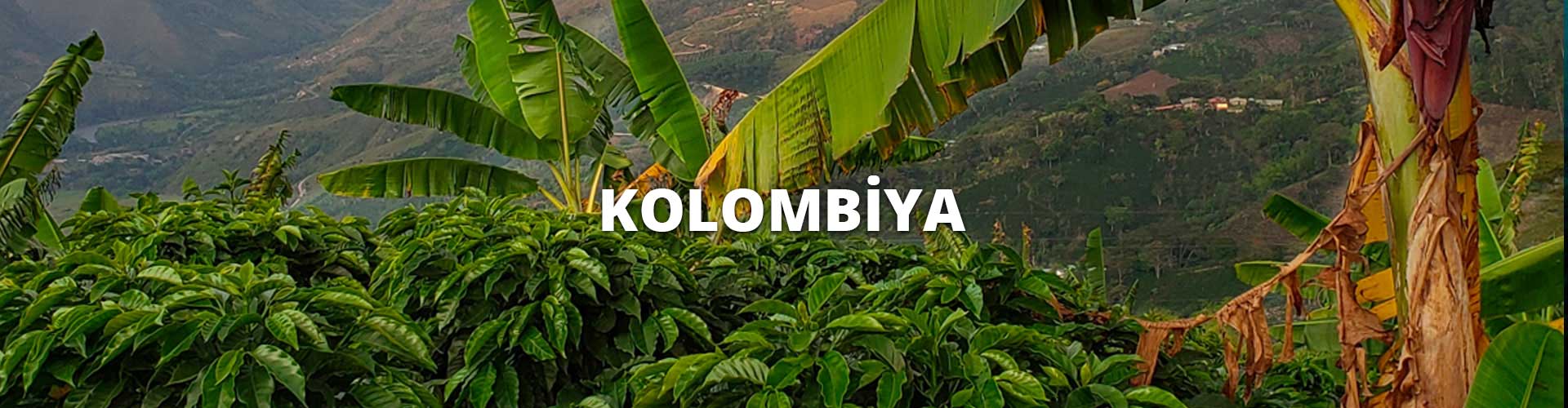
Coffee came to Colombia in the late 1700s by way of Jesuit priests who were among the Spanish colonists, and the first plantings were in the north of the country, in the Santander and Boyaca departments. Throughout the 19th century, coffee plants spread through the country, with a smaller average farm size than more commonly found throughout other Latin American producing countries.
Commercial production and export of coffee started in the first decade of the 1800s, but remained somewhat limited until the 20th century: The 1927 establishment of the Federación Nacional de Cafeteros de Colombia (aka FNC, see below) was a tremendous boost to the national coffee industry, and Colombia quickly established itself as a major coffee-growing region, vying with Brazil and Vietnam for the title of top global producer.
Colombia still produces exclusively Arabica coffee, and though the country suffered setbacks and lower yields from an outbreak of coffee-leaf rust in the early 2010s, production has fairly bounced back thanks to the development and spread of disease-resistant plants, as well as aggressive treatment and preventative techniques.
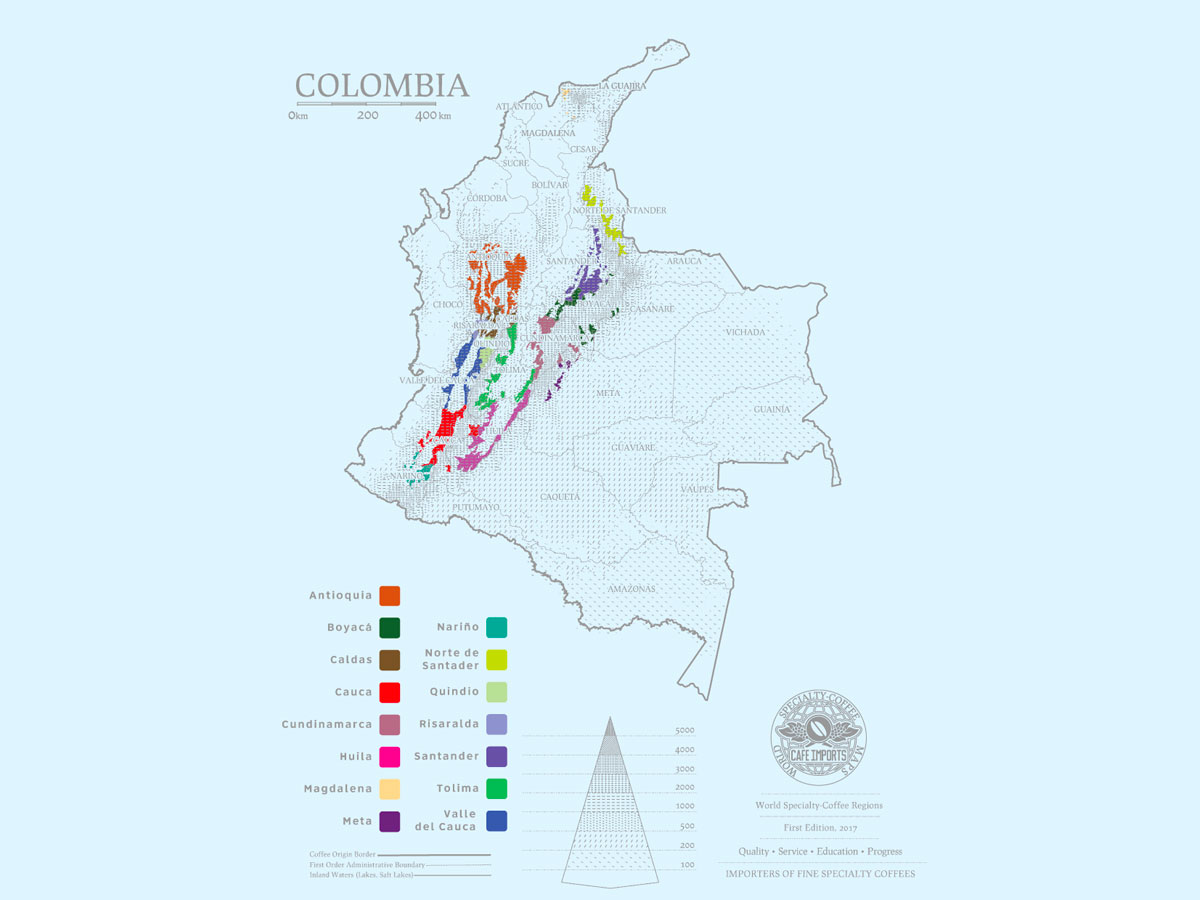
Colombia’s size alone certainly contributes to the different profiles that its 20 coffee-growing departments (out of a total 32) express in the cup, but even within growing regions there are plentiful variations due to the microclimates created by mountainous terrain, wind patterns, proximity to the Equator, and, of course, differences in varieties and processing techniques.
The country’s northern regions (e.g. Santa Marta and Santander) with their higher temperatures and lower altitudes, offer full-bodied coffees with less brightness and snap; the central “coffee belt” of Antioquia, Caldas, and Quindio among others, where the bulk of the country’s production lies, produce those easy-drinking “breakfast blend” types, with soft nuttiness and big sweetness but low acidity. The southwestern departments of Nariño, Cauca, and Huila tend to have higher altitude farms, which comes through in more complex acidity and heightened florality in the profiles.
To capitalize on this broad spectrum of flavors and to emphasize the diversity available to roasters and consumers from within a single country, the coffee growers’ association has begun to provide origin distinctions, and has developed aggressive marketing campaigns designed to boost the regions’ signals to buyers worldwide.